Start With Morning and Leaving-Home Routines
A useful smart home plan starts with repeated moments, not with a cart full of devices. In the morning, smart bulbs and plugs can handle lighting and appliances; before leaving, video doorbells, cameras, and contact sensors help you check the home’s status.
Prioritize the entryway, living room, and kitchen before expanding to every room. When comparing stores, use them neutrally to verify price, delivery timing, return policy, compatibility notes, and availability.
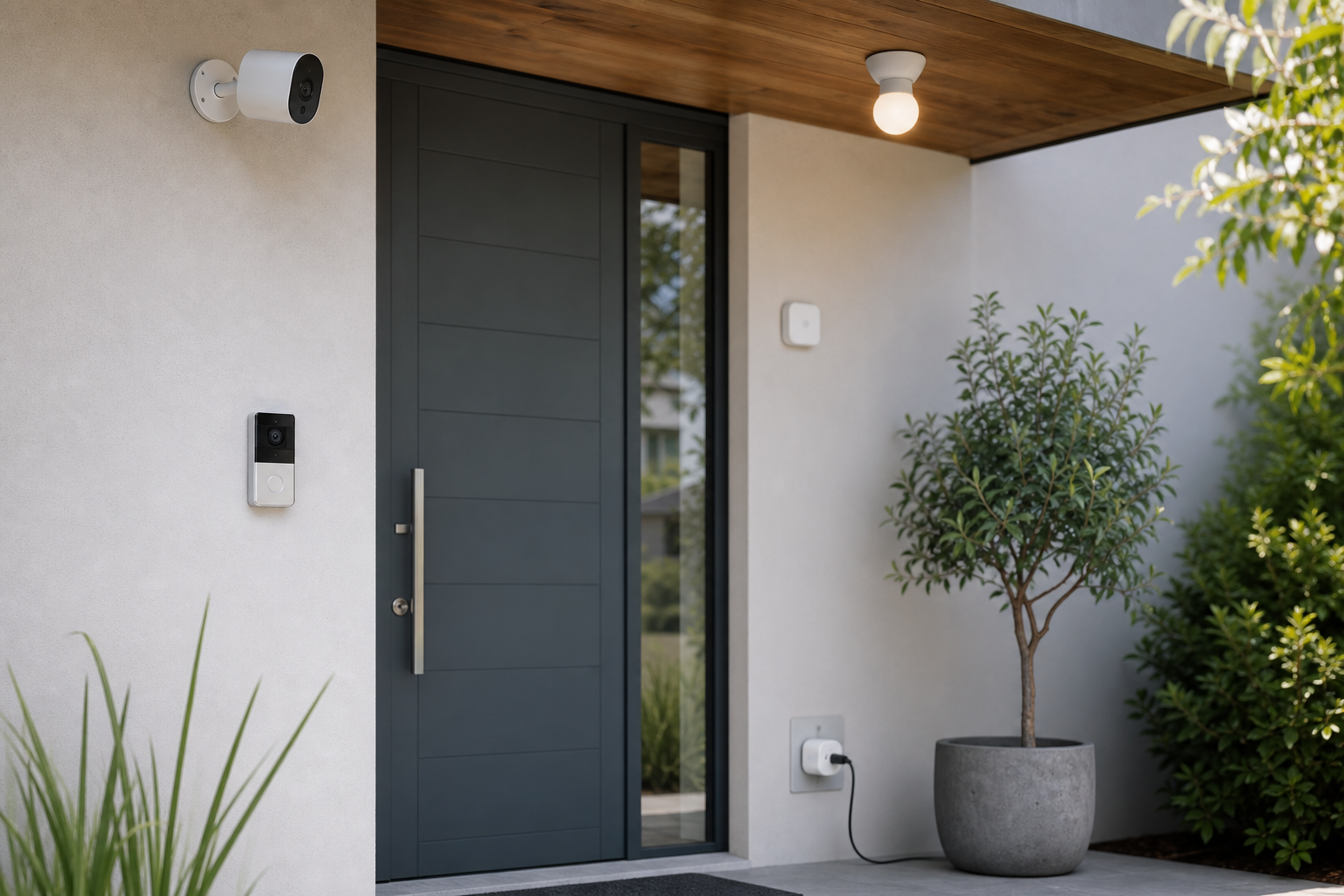
- For the entryway, compare a video doorbell and a door or window contact sensor first.
- For living room lighting, check dimming, color temperature, and voice assistant support.
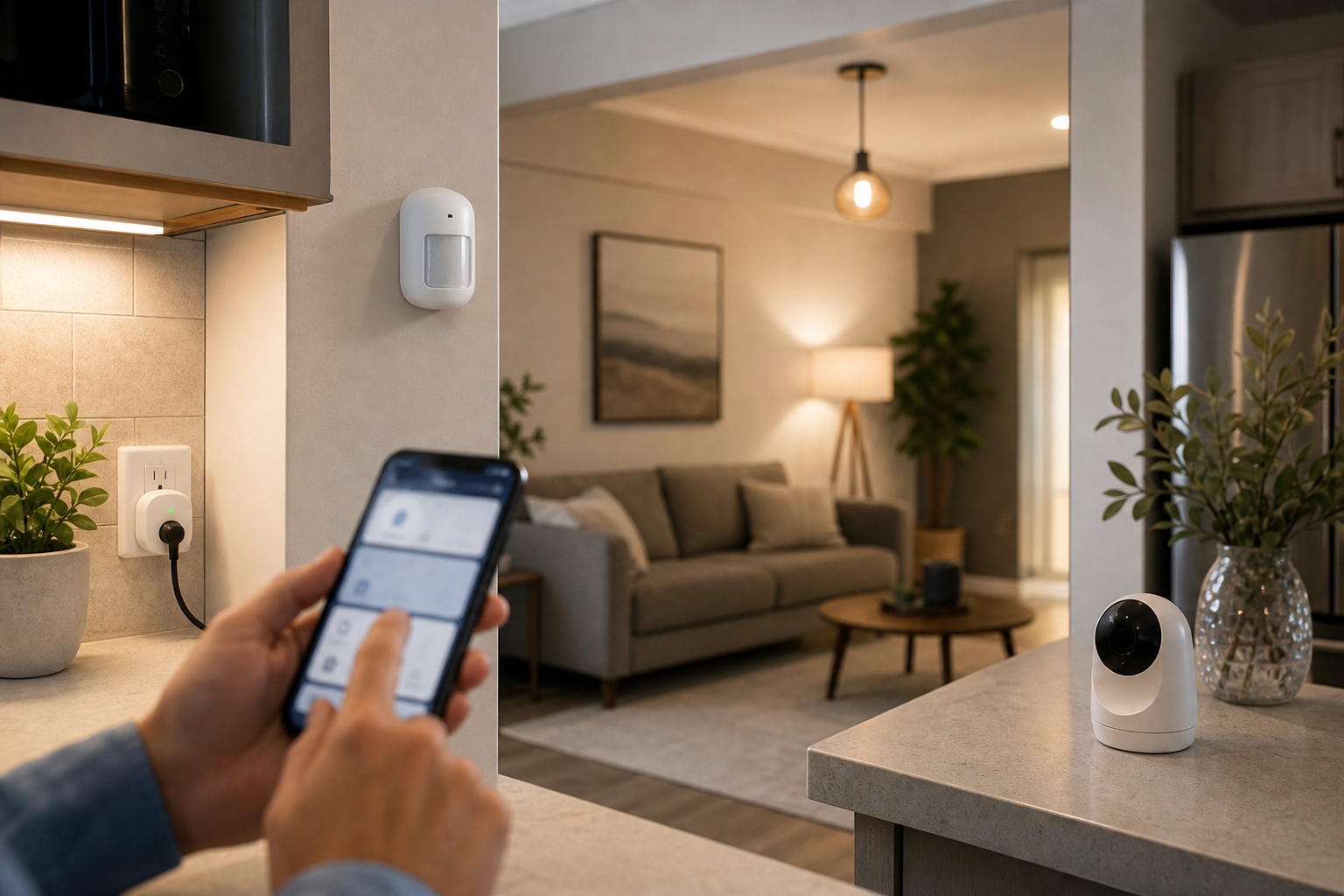
- For smart plugs, confirm the power rating and scheduling controls.
- For cameras, compare storage method, power source, field of view, and mounting location.
Daytime and Away Mode Depend on Detection
During work hours or while the home is empty, accurate detection matters more than complex automation. Motion sensors, window sensors, and outdoor cameras should cover specific areas so alerts stay useful instead of constant.
For security products, do not judge by resolution alone. Compare field of view, night vision, local storage, subscription requirements, and account protection. No device guarantees safety, so these tools work best as part of a broader home-security routine.
- Outdoor cameras need weather resistance, power planning, and a realistic mounting point.
- Sensors should be compared by battery life, hub requirements, and response speed.
- Look for alert controls that separate people, motion, packages, or open doors where available.
- Prefer apps that support strong passwords, two-factor authentication, and clear privacy settings.
Evening Automation and Long-Term Costs
Evening is where lighting scenes, arrival triggers, and plug schedules usually feel most useful. Hall lights can switch on softly, lamps can follow a predictable routine, and camera notifications can use different settings after dark.
Before buying, avoid mixing too many ecosystems too quickly. Check whether the products use Matter, Wi-Fi, Zigbee, or Thread, and whether future bulbs, plugs, and sensors can be managed from the same app or hub.
- Separate free features from features that require a monthly subscription.
- For bulbs, verify brightness, color temperature, socket size, and fixture compatibility.
- Automation rules should fit household habits without surprising other family members.
- Include batteries, mounts, memory cards, chimes, and replacement parts in the total cost.
Frequently asked questions
What should I compare first?
A practical guide to choosing security cameras, doorbells, sensors, smart plugs, and lighting around the routines that repeat throughout the day. Start with use frequency, dimensions, warranty, replacement parts, recent reviews, and the return policy before chasing the lowest price.
Should I check Amazon, Coupang, or AliExpress first?
Use Amazon and Coupang for fast delivery categories, then compare AliExpress for low-cost accessories, parts, and bundles.
Where should I confirm price and availability?
Prices, coupons, shipping times, and stock change often, so confirm the final details on the merchant page before buying.