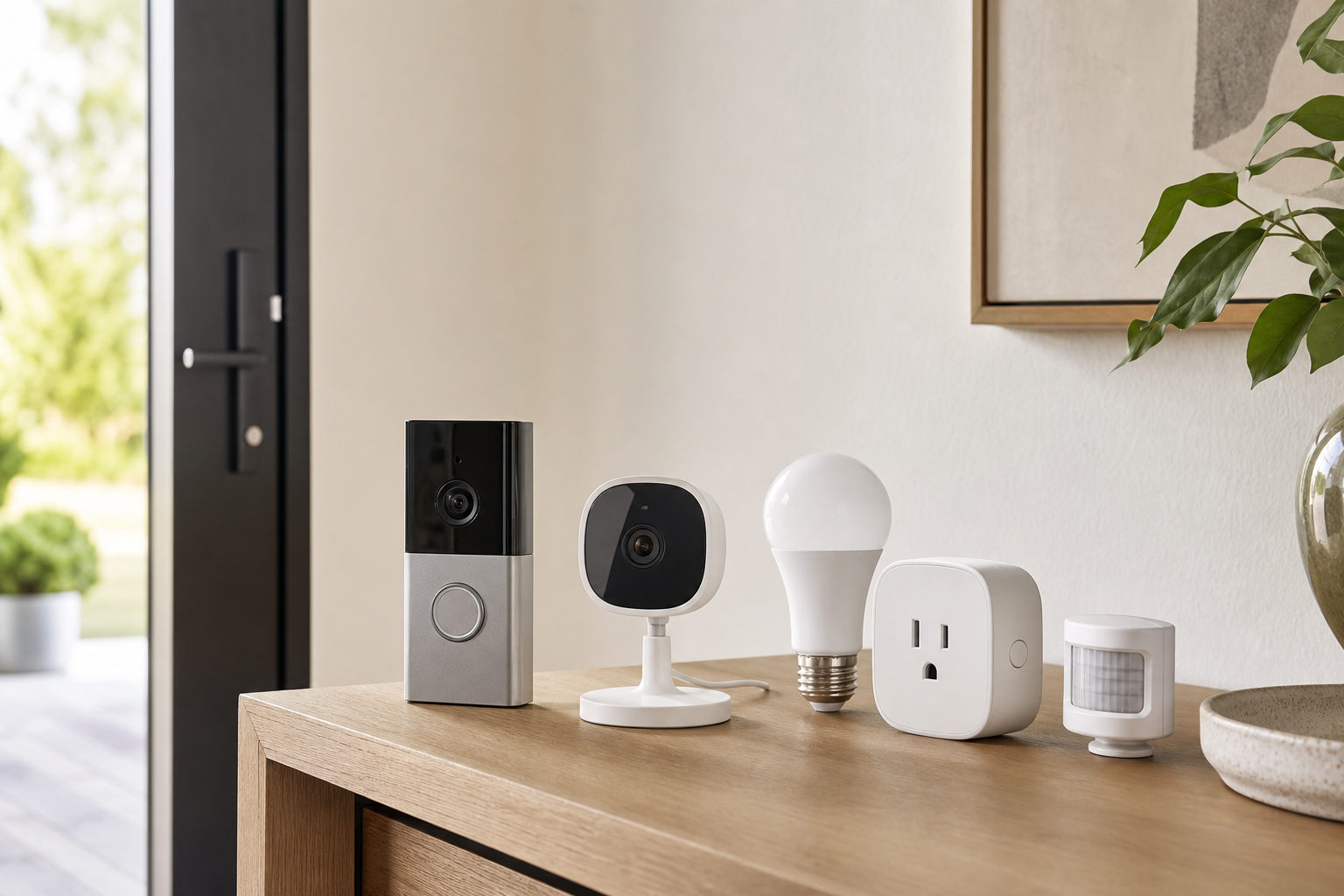
Start with ecosystem and connection type
A smart home works best when devices cooperate instead of living in separate apps. Check compatibility with your current voice assistant, hub, phone platform, router, and preferred automation app before comparing individual product features.
Use retailer or marketplace pages neutrally to verify price, delivery timing, return policy, warranty details, and local availability.
- Matter support can help when you want devices to work across more than one platform.
- Wi-Fi devices are simple to install but depend heavily on router quality and signal strength.
- Thread, Zigbee, and Z-Wave devices may need a hub or border router.
- Look for recent app updates, two-factor authentication, and clear account controls.
Judge cameras and doorbells by the installation site
Security cameras and video doorbells should be compared by more than resolution. Field of view, night performance, power source, weather rating, notification speed, and storage choices all affect daily usefulness.
Cloud storage can be convenient but may require a subscription. Local storage can simplify ongoing costs, though backup and remote access vary by product.
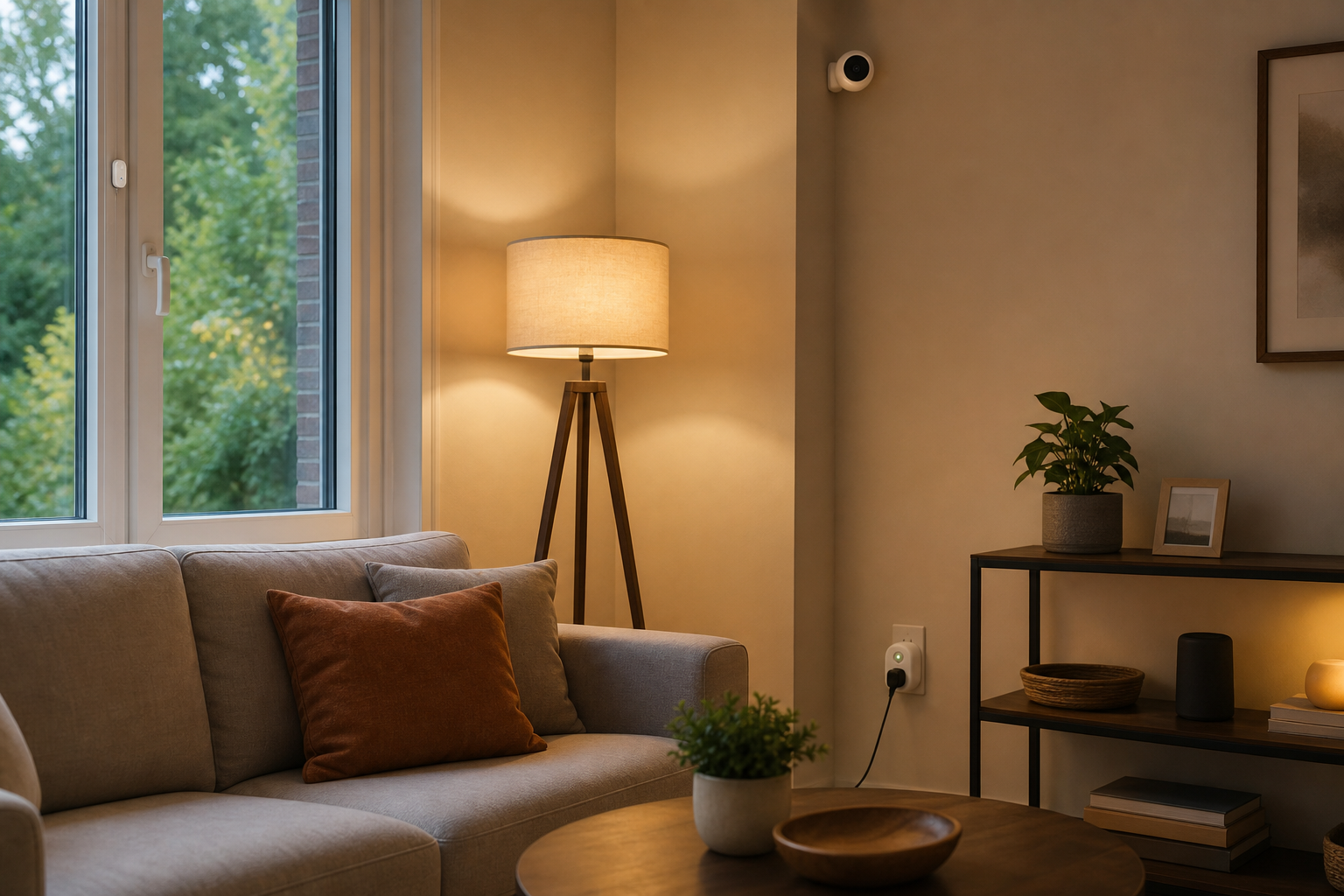
- For a front door, check vertical field of view and package-area coverage.
- Battery models are easier to place, but charging intervals and cold-weather behavior matter.
- Wired models can be steadier, but existing wiring and chime compatibility are important.
- Review privacy zones, recording schedules, shutoff controls, and account security options.
Match sensors, plugs, and bulbs to the automation goal
Motion sensors, contact sensors, smart plugs, and smart bulbs are small devices that define how useful an automation feels. Decide what should trigger an action, what should cancel it, and when people should not be disturbed.
For plugs, compare electrical load rating and energy monitoring. For bulbs, compare brightness, color temperature, dimming quality, and fixture fit. For sensors, compare detection range, battery life, and mounting options.
- Lighting automations feel more natural when time, ambient light, and motion are combined.
- Check plug ratings before using them with heaters or higher-load appliances.
- Place sensors where behavior is predictable, such as doors, windows, halls, and utility rooms.
- Confirm that alerts, quiet hours, and household permissions can be adjusted by user.
Frequently asked questions
What should I compare first?
Compare smart home devices by compatibility, installation, storage options, privacy controls, and the automations they can reliably support. Start with use frequency, dimensions, warranty, replacement parts, recent reviews, and the return policy before chasing the lowest price.
Should I check Amazon, Coupang, or AliExpress first?
Use Amazon and Coupang for fast delivery categories, then compare AliExpress for low-cost accessories, parts, and bundles.
Where should I confirm price and availability?
Prices, coupons, shipping times, and stock change often, so confirm the final details on the merchant page before buying.