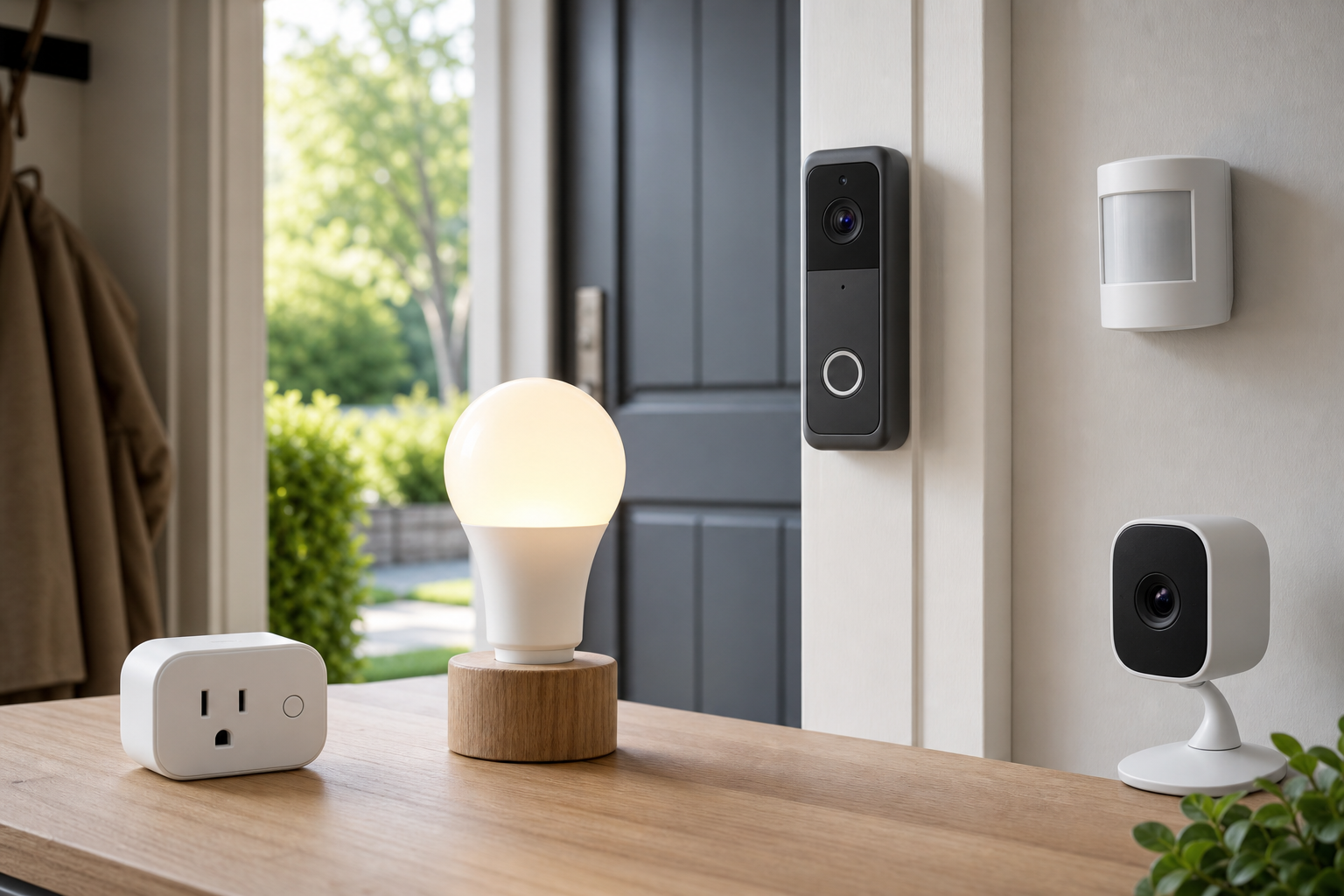
Start with the routine you want to improve
A useful smart home setup begins with real routines, not a cart full of devices. List the moments you want to handle better, such as checking the front door, lighting a hallway at night, detecting an open window, or turning appliances off remotely.
- Use a video doorbell or outdoor camera for entry points.
- Use contact sensors on doors and windows, and motion sensors in halls or utility areas.
- Choose smart bulbs by brightness, color temperature, and automation support, not only color effects.
- Check a smart plug's power rating before pairing it with lamps, fans, or small appliances.
Compare compatibility and installation limits
The best products are the ones that fit your home and work together. Check whether devices support Wi-Fi, Thread, Zigbee, or Matter, whether they need a hub, and whether outdoor devices have suitable weather resistance and power options.
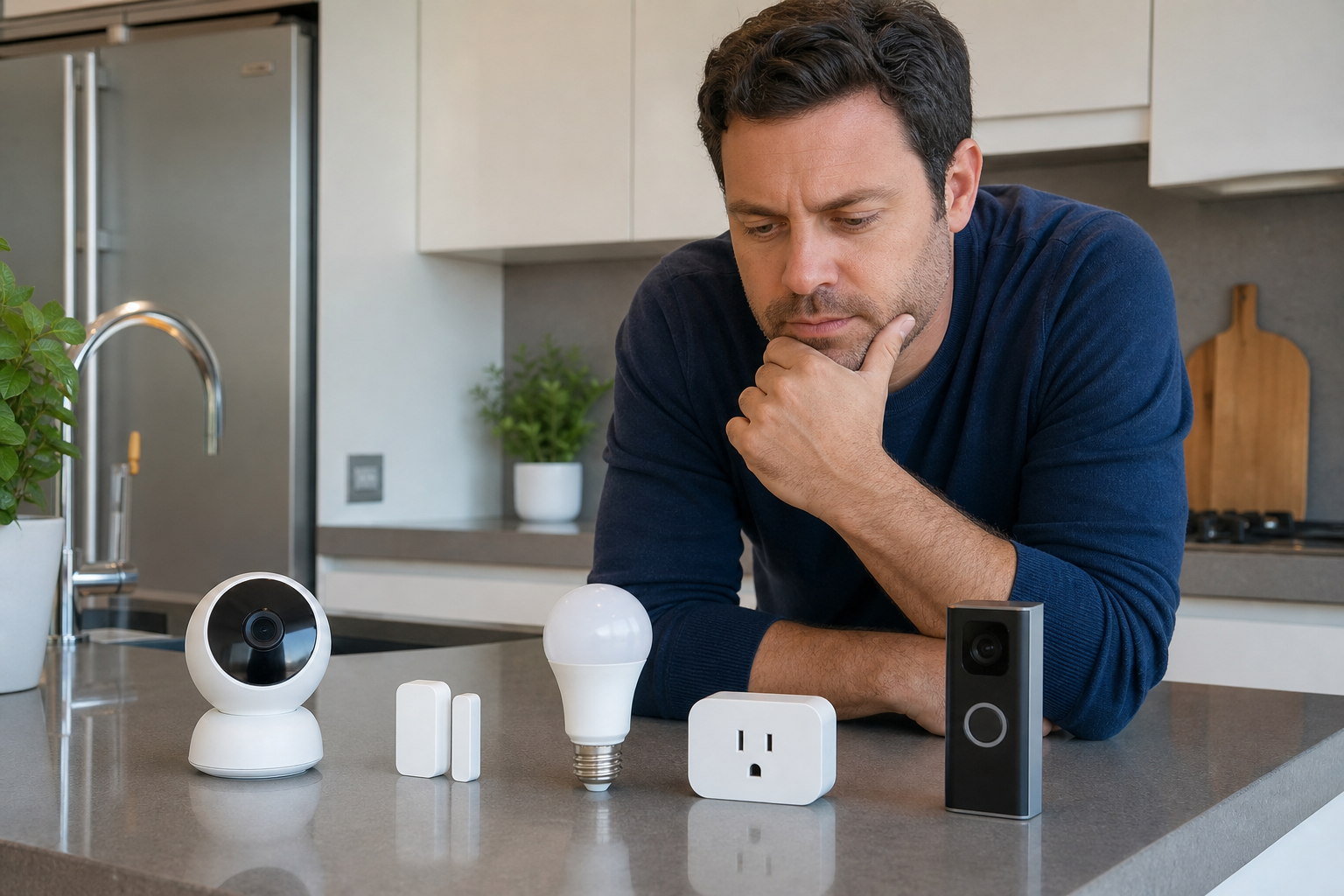
- For rentals, favor adhesive mounts, battery power, and removable hardware.
- For continuous recording, look closely at wired power and storage choices.
- For sensors, response time and notification delay matter more than extra features.
- Use stores only to verify price, delivery, return policy, and availability.
Account for privacy and long-term upkeep
Smart security and lighting products can involve subscriptions, cloud storage, batteries, firmware updates, and shared household access. Compare local storage, cloud plans, notification controls, and privacy zones before committing to a system.
- For cameras, check recording zones, privacy masking, and account controls.
- For video doorbells, compare two-way audio quality and visitor notification options.
- For bulbs and plugs, confirm what happens after a power outage.
- Start with the most important rooms, then expand with sensors and lighting automations as needed.
Frequently asked questions
What should I compare first?
A practical buying guide for comparing security cameras, sensors, smart plugs, bulbs, and video doorbells without relying on temporary deals or hype. Start with use frequency, dimensions, warranty, replacement parts, recent reviews, and the return policy before chasing the lowest price.
Should I check Amazon, Coupang, or AliExpress first?
Use Amazon and Coupang for fast delivery categories, then compare AliExpress for low-cost accessories, parts, and bundles.
Where should I confirm price and availability?
Prices, coupons, shipping times, and stock change often, so confirm the final details on the merchant page before buying.