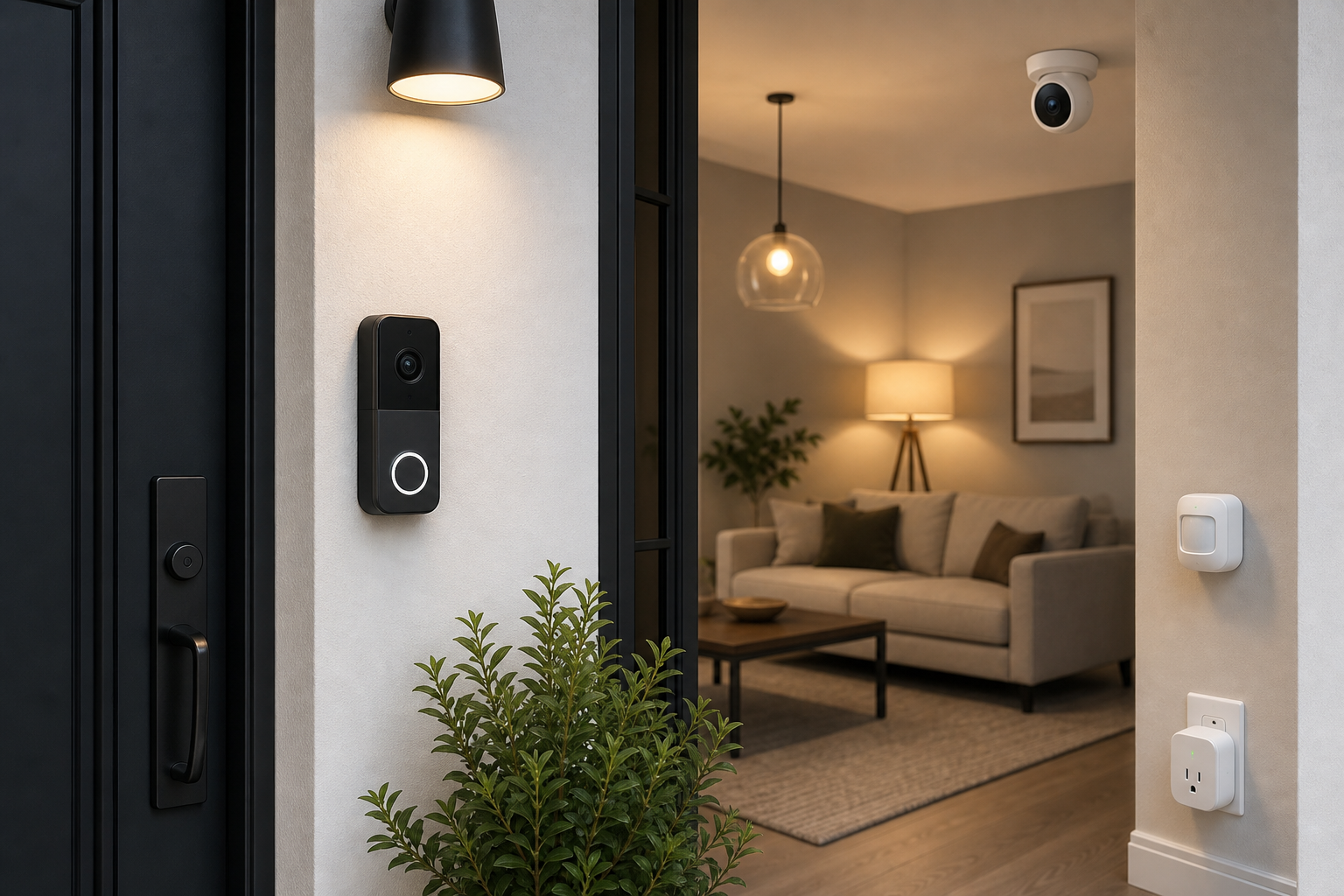
Start with routines, not gadgets
A useful smart home starts with repeated moments, not with the longest product list. Map the routines you actually use, such as leaving home, arriving at night, checking deliveries, or turning lights down before sleep, then choose cameras, sensors, plugs, and bulbs around those needs.
Before buying, check compatibility with your phone, voice assistant, hub, and Wi-Fi setup. Matter, Thread, Zigbee, and Wi-Fi support can affect setup effort, range, and how easy the system is to expand later.
- Confirm whether the main devices can be controlled from one app or platform.
- Choose battery, wired, or plug-in power based on the installation location.
- Look for household sharing, user permissions, and quiet-hours controls.
- If a hub is required, include its cost, placement, and network coverage in the plan.
Judge security devices by alert quality
Security cameras, video doorbells, contact sensors, and motion sensors are most useful when they send relevant alerts at the right time. Field of view, night image quality, two-way audio, motion zones, and storage options often matter more than broad feature lists.
Compare cloud and local storage carefully, including retention, access, and subscription requirements. Stores should be used as neutral places to verify price, delivery timing, return policy, availability, and current product bundles.
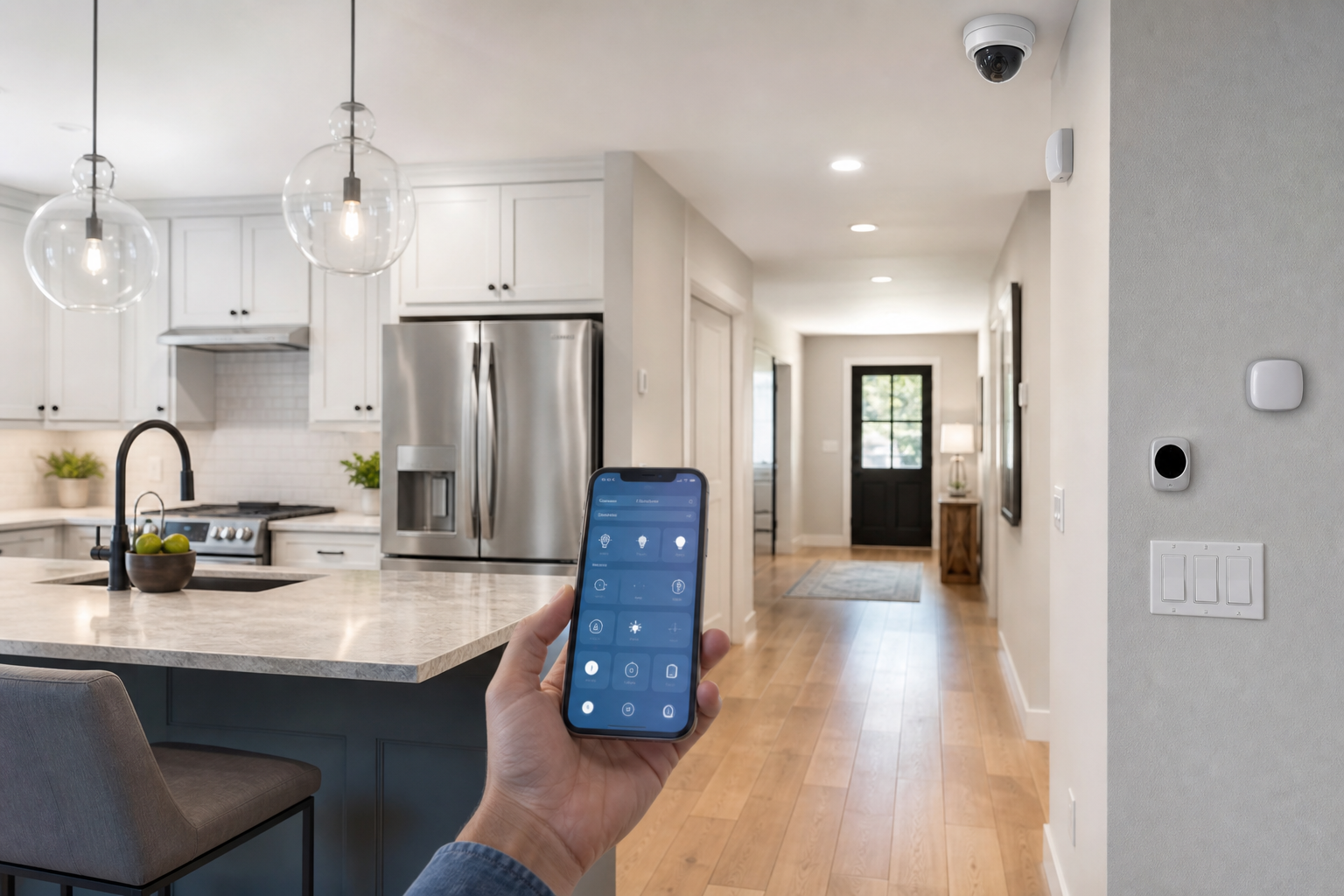
- For the front door, compare video doorbells alongside contact sensors.
- For indoor cameras, check privacy shutters, recording indicators, and app permissions.
- For outdoor cameras, review weather rating, operating temperature, and cable routing.
- For sensors, look for sensitivity controls and placement guidance to reduce false alerts.
Keep lighting and power automation dependable
Smart bulbs and smart plugs are simple entry points, but everyday reliability depends on the details. Check how bulbs behave with existing wall switches, whether a lamp is suitable for smart control, the plug’s rated load, and how stable your network is in that room.
Automation should begin with clear rules. Schedules, away mode, and motion-based hallway lighting are easier to maintain than complex chains, and you can add scenes or conditions once the basics work consistently.
- For smart bulbs, compare brightness, color temperature, dimming behavior, and switch compatibility.
- For smart plugs, match the device’s power draw and use case to the plug specifications.
- For hallways and entry areas, pair motion sensors with a sensible delay time.
- Keep a manual way to turn key lights and devices on or off if automation fails.
Frequently asked questions
What should I compare first?
A practical guide to comparing security cameras, smart plugs, sensors, smart bulbs, and video doorbells by compatibility, installation, alert quality, privacy controls, and everyday reliability. Start with use frequency, dimensions, warranty, replacement parts, recent reviews, and the return policy before chasing the lowest price.
Should I check Amazon, Coupang, or AliExpress first?
Use Amazon and Coupang for fast delivery categories, then compare AliExpress for low-cost accessories, parts, and bundles.
Where should I confirm price and availability?
Prices, coupons, shipping times, and stock change often, so confirm the final details on the merchant page before buying.